Wednesday, November 21, 2012

Interview with Francine Gachupin, Co-author of Health and Social Issues of Native American Women

0 comments

What prompted you to write Health and Social Issues of Native American Women? What "message" do you want to communicate?

Native American women are remarkable contributors to tribal societies and native family structures.  Their dreams and hopes for the safely, well-being and happiness of their families and communities are often at the forefront of their daily activities and yet, many of them struggle with a plethora of issues.  Our book highlights some of the challenges faced by Native American women and underscores their incredible strength and resiliency.  

What was the highlight of your research? In the course of your research, what discovery surprised you the most? What surprises readers/others the most about your research?

The highlight of the book and the research within its chapter is the Native American women authors.  The book is the voice of the women themselves, for many of the chapters are on topics of the lives lived by the women themselves.  The book is a culmination of challenges surpassed and accomplishments achieved.  

How did your research change your outlook on the topic?

The book is tangible proof that Native American women can succeed and do well for themselves, their families, and their communities without compromising their traditional beliefs, values and identity.  Each of the chapters provides valuable resources and overview of approaches to problems, that unfortunately, are too commonplace.

How have people reacted to your book and/or the ideas you set forth? Is it what you hoped for, or is there more work to be done?

The book is relatively new and so far, the reaction from people has been very positive.  The book provides a good foundation and more work does need to be done to provide similar background and context for other issues related to health and social issues for Native American women.

What's next for you?

My personal professional goal has always been to provide tribes with technical assistance in addressing health disparity issues for their respective tribes and I continue to work and strive to provide accurate and timely data to tribes.


Francine C. Gachupin, PhD, MPH, CIP, is operations manager of the Human Research Protection Office at the University of New Mexico, Albuquerque. She has extensive experience working with American Indian tribal communities focusing on chronic disease surveillance, public health practice, epidemiology and research. Gachupin obtained her doctorate from the University of New Mexico and her master's degree in public health from the University of Washington.

Tuesday, November 20, 2012

Interview with Jennie Joe, Co-author of Health and Social Issues of Native American Women

0 comments


The idea and encouragement to undertake this book project emerged out of a series of discussion with the publisher. There was a general agreement that there was a need to capture some of the critical health concerns and social issues experienced by contemporary Native American women. In particular, concerns and issues that can be casted through the lens of Native Women scholars.

What "message" do you want to communicate?

One of the aims of the book was to provide a meaningful context for the issues discussed, including relevant history and the impact of colonization. The intent was also to illustrate interventions or solutions being undertaken to address these concerns. 

What was the highlight of your research? In the course of your research, what discovery surprised you the most? What surprises readers/others the most about your research?

We hope the readers see the emphasis placed by the contributors on personal and cultural resiliency and endurance as an integral part of survival for many Native American women. 

How did your research change your outlook on the topic?

We tried to avoid adding to existing negative stereotypes but to focus on issues of importance to Native American women and their ability to tap into their socio-cultural strengths to manage multiple problems encountered.

How have people reacted to your book and/or the ideas you set forth? Is it what you hoped for, or is there more work to be done?

The reaction has been positive so far. We hope our colleagues will continue to add to knowledge through their work and publications.

What's next for you?

Maybe a look at cross-cultural comparison with women from other cultures and/or a focus on intergenerational changes faced by Native American families as they adapt to a rapidly changing world.  


Jennie R. Joe, PhD, MPH, MA, is professor emeritus in family and community medicine at the University of Arizona, Tucson. She received her doctorate from the University of California, Berkeley. Her scholarly activities and work is in the area of cross-cultural health with an emphasis on health concerns of Native Americans. Some of her national and international work is with the Institute of Medicine and aboriginal health programs in Canada. 


Tuesday, November 13, 2012

ABC-CLIO Commemorates Native American Heritage Month

0 comments
To commemorate Native American Heritage Month and honor the history and legacy of Native American pioneers, ABC-CLIO’s American Indian Experience database is proud to present a new primary source collection of narratives highlighting Indian Removal and migration to Oklahoma. 


Starting in 1830, with the passage of the Indian Removal Act, Eastern tribes forcibly relinquished their lands and removed west of the Mississippi. This forced relocation is widely known as The Trail of Tears. These forced removals—or the many Trails of Tears—occurred mostly between the 1830s and 1860s, impacting an estimated 50,000 to 100,000 Native people, who settled lands in Indian Territory roughly located in present-day Oklahoma. The Dawes Act, enacted in 1887, further redistributed and divided lands, diminishing tribal sovereignty and permanently impacting tribal lifeways, the effects of which are still felt in Native communities today.

Collected in the 1930s by the Indian-Pioneer History project, the Indian Removal and Migration Narratives document the removal experience and the legacy of migration. These histories feature details of the westward removal journey, as family members struggled to stay together and survive the many environmental and man-made challenges of the arduous trek. The stories further illustrate how generations of Native Americans adapted to new land and to new resources in Oklahoma, forging necessary alliances to survive. Each narrative is presented with both the original primary source document and its transcription and is enriched by supplementary reference materials that offer students opportunities for further study. 

To sign up for a FREE 60-Day trial of this database, please visit: 
http://www.abc-clio.com/Previews/index.aspx

Wednesday, November 7, 2012

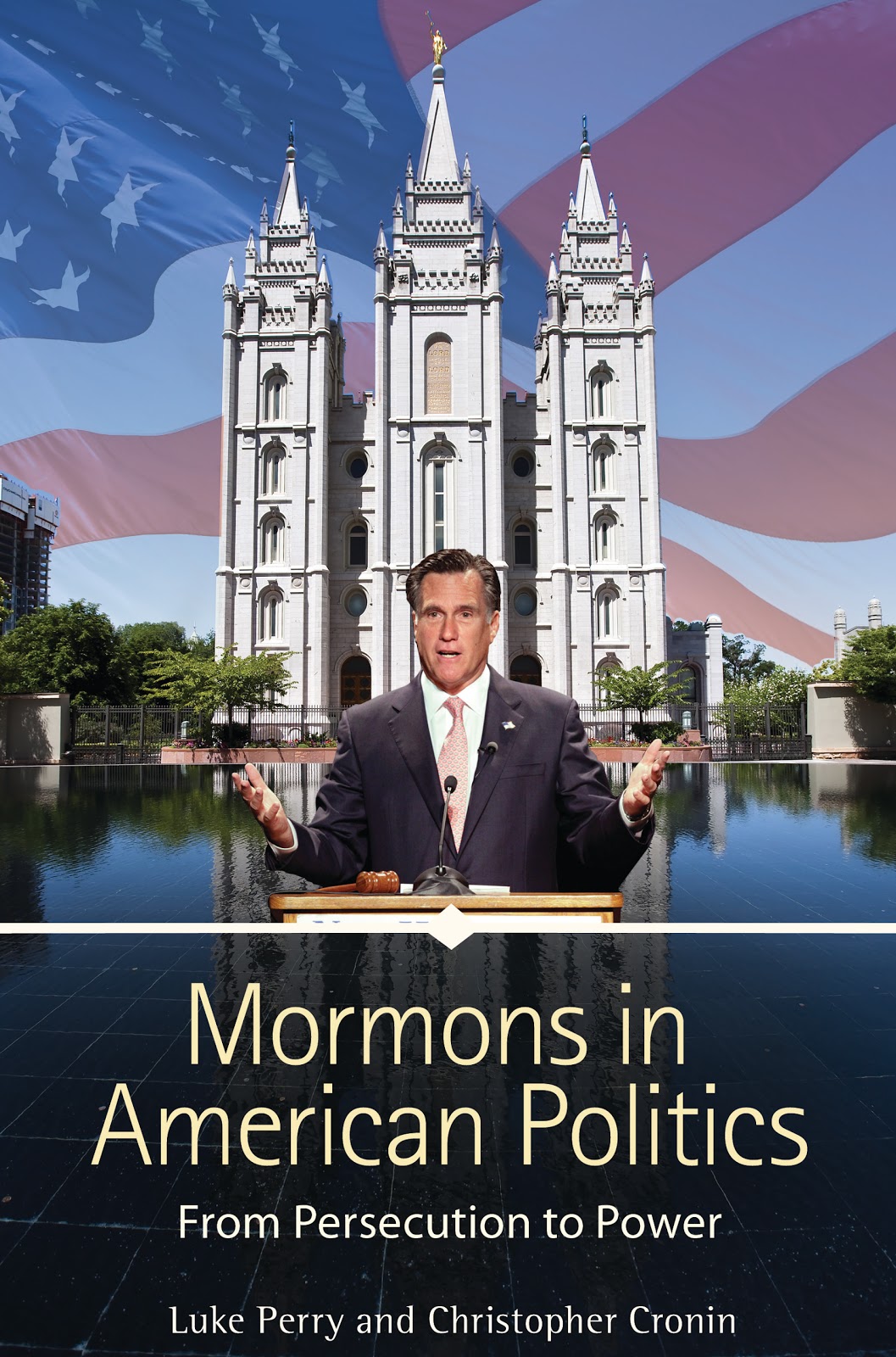
The Significance of a Mormon Presidential Nominee

0 comments
The 2012 presidential election was particularly significant in regard to the relationship between religion and politics because Mitt Romney became the first Latter Day Saint to earn the nomination of a major party. Mitt Romney is the most prolific Mormon politician of the 21st century. Romney family history has deep roots within the Mormon tradition. Miles Romney, an Englishmen, converted to Mormonism in 1837 after encountering a missionary and moved to Nauvoo, Illinois, where Mitt Romney’s great grandfather, Miles Park Romney, was born. The Romney’s headed west after Smith’s assassination and Miles helped to settle towns in Utah and Arizona, prior to fleeing to Mexico after being pursued by local authorities for being a polygamist. Mexican law did not prohibit polygamy like American law did. George Romney, Mitt’s father, was born in Mexico to Anna and Gaskell Romney, who deviated from precedent and did not engage in plural marriage. The Romney’s left Mexico to escape the 1912 revolution and eventually settled in Salt Lake City. George Romney worked as CEO of General Motors, served three terms as Republican governor of Michigan in the 1960s, where Mitt was raised, and unsuccessfully sought the Republican presidential nomination in 1968.

As a candidate for president in 2012, Mitt Romney’s campaign team chose to downplay the nature of his Mormon heritage. While not completely ducking the issue of his faith, Romney took very few opportunities to highlight his cultural and spiritual roots in the Mormon faith. Much of this has to do with tensions in the Republican Party between Evangelical voters and Mormonism. This decision to avoid Romney’s religion met with little opposition in the election campaign of Barack Obama. The incumbent’s campaign team certainly had the option of highlighting a faith that has historically ruffled mainstream America’s feathers. Add to this the potential conflict within the Republican Party, and the Democrats could have played up Romney’s religion much bigger than they did.  This perhaps speaks to the successful execution of the Romney team’s plan to downplay the religion card.  However, taking into account the many potential strengths a Mormon candidate can draw on from his or her faith; this may have been a mistake.  As discussed in greater detail in our book, Mormons in American Politics, several theological and social developments within the Church of Latter Day Saints have provided for much greater political benefits in identifying with the Mormon faith.  It is a uniquely American religion with familiar Christian overtones.  It is an adaptable faith that has grown into modern, conservative, American cultural values.  It is a growing faith with vibrant new members and strong financial resources. The identity politics of modern American elections will allow future Mormon candidates to make use of these unique features.  Whether or not the time was right this particular presidential election for a Mormon candidate to feature his or her religious faith as a prominent part of the campaign, it will not be long before that becomes the norm.  At least for now, the history involved overshadows the promising political gains. This history is not lacking in drama either.

The Church of Jesus Christ of Latter Day Saints began in 1830 in Palmyra, New York with just six members, under the leadership of Joseph Smith, the founding prophet. Membership grew to over 26,000 people by the time Smith was killed in 1844. Mormons have become the fourth largest church in the United States and the country’s wealthiest relative to size. Today the church has a global membership of over 14 million, the majority of whom live outside the United States. Early Mormons were theologically and socially different than their neighbors. They lived in theocratic communes and engaged in plural marriage, the practice of men having several wives.  Persecution typically intensified along the Mormon trail as their communities quickly grew in number and began to influence politics and business. And so the Mormons fled the United States under the leadership of Brigham Young after an imprisoned Joseph Smith was murdered by an angry mob. They landed in Utah, where the nation and the federal government persecuted the religion. Mormon leaders were deemed too theocratic and the practice of polygamy was viewed as a threat to American morality and culture. The Mormon Church eventually ended the practice of plural marriage in 1890 under the threat of having their temples and property seized by the federal government. This issue maintained national prominence after statehood was attained in 1896 because of widespread opposition to Mormon apostle Reed Smoot being seated as a U.S. Senator from Utah. It took four years of hearings and deliberations, but Smoot was finally seated and became an instrumental figure in the normalization of relations between Mormons at Americans at large. A century later, Harry Reid, a Mormon and U.S. Senator from Nevada, was elected Majority Leader, a position he has held since 2004. The Mormon Church is the most persecuted religious group in American history, but through many years of adaptation and growth the Church is poised to take its place in positions of political power for years to come.


Luke Perry, PhD, is associate professor of government at Utica College, Utica, NY. Perry holds a doctorate in political science from the University of Massachusetts at Amherst. 

Christopher Cronin, PhD, is assistant professor of government studies at Methodist University, Fayetteville, NC. Cronin holds a doctorate in political science from the University of Massachusetts at Amherst.

Monday, November 5, 2012

Interview with Steve Littleton, Co-Editor of Voices of the American Indian Experience

0 comments

What prompted you to write Voices of the American Indian Experience? What "message" do you want to communicate?  Why is this subject important?

When Jim first approached me with this project idea, I was enthusiastic about the opportunity to research and organize materials written by Native Americans into an accessible resource for students and researchers. By combining familiar materials, such as court cases and legislation, with less well-known first person accounts and personal narratives, the reader is able to gain a much broader understanding of the Native American experience as it evolved from contact to today. These documents illustrate both the triumphs and tragedies that are part and parcel to human history.

What was the highlight of your research? In the course of your research, what discovery surprised you the most? What surprises readers/others the most about your research?

These narratives comprise a landscape of memories that are at once both universal and unique. Wherever Euro-Americans were, Native Americans were, and in many ways they have contributed, and continue to contribute, the best of their culture to ours. They fought in the civil war, they played college basketball, they loved, they dreamed, and above all, they fought, and continue to fight, to save their culture, to preserve their sovereignty, and for the right to represent their own history. This book documents the ways of life, beliefs, hopes, and dreams that show how the American Indian adds depth to the American experience. 
 
How did your research change your outlook on the subject?

I think that the most interesting part of this research was coming to appreciate the intricacies of Native American culture and history. One thing I have learned is that they see and understand history in a very different way from Euro-Americans, and it was an interesting challenge to try to bridge the gap and make the work as a whole understandable to a broad audience, while maintaining a healthy respect for the uniqueness of the Native American historical memory.


Steven A. Littleton is a former park ranger-interpreter at Little Bighorn Battlefield National Monument in Montana. He is currently a doctoral candidate in history of the American West at Northern Arizona University in Flagstaff, AZ.

Tuesday, October 30, 2012

Interview with Dave Pruett, Author of Reason and Wonder: A Copernican Revolution in Science and Spirit

0 comments

What prompted you to write Reason and Wonder: A Copernican Revolution in Science and Spirit? What “message” do you want to communicate?

Humans have two very different ways of making sense of the world. Let’s call them head knowledge and heart knowledge. Many, particularly in the West, struggle to effectively integrate these seemingly disparate modes of knowing. Because of the dynamics of my upbringing as the son of a very rational father—a physician—and a very intuitive and religious mother, that struggle was acute. On the one hand, I majored in engineering, loved mathematics and science, was a child of the space race, and eventually worked for NASA for a decade. On the other hand, I have a “poet nature” and over the years had learned to listen carefully to the still small voice of intuition. Well into my thirties, these two aspects often seemed in conflict. The journey that culminated in Reason and Wonder was initially a journey for personal integrity.  But along the way, I came to suspect that the roots of the conflict were societal and universal. At the societal level, the tension between the rational and the intuitive plays out as the conflict between science and religion that has dogged humankind since Descartes and Copernicus.

Reason and Wonder has many subtexts.  But the primary one is that science and faith don’t have to be adversarial.  They can be complementary.  The individual who embraces both is more whole, and the society built upon the wisdom of both is saner.

What was the highlight of your research? In the course of your research, what discovery surprised you the most? What surprises readers/others the most about your research?

Reason and Wonder represents a radical departure from my conventional academic research in applied mathematics. History was never my strong suit, yet I had to awaken an inner historian to complete Reason and Wonder. What surprised me most was that, with enough digging, Copernicus, Galileo, Kepler, Newton, Darwin, Einstein, and other iconic scientists—the patriarchs of our scientific legacy—came alive. They’ve become my friends and mentors. I have the utmost respect for what these men (and women, e.g., Rosalind Franklin) accomplished for science and humanity, often under the most taxing or even crippling personal circumstances.

Reason and Wonder is a patchwork quilt of individual stories stitched together to tell the big story of the cosmos and of our place as humans in it. What readers seem to appreciate most is the richness and wonder of that story.

How did your research change your outlook on the subject?

It is too often assumed in our polarized society that one must choose between science and faith, a choice that Nobel laureate in chemistry Ilya Prigogine calls “tragic.” Therefore, it surprised me, and it may surprise the reader, how key to their discoveries were the religious impulses of the greatest scientists our species has produced. Einstein may have put it best: “The most beautiful emotion we can experience is the mystical,” he said. “It is the source of all true art and science.”

How have people reacted to your book and/or the ideas you set forth? Is it what you hoped for, or is there more work to be done?

This is my first book for the general public. It took twelve years, six full revisions, and two good editors before it was deemed ready for public consumption. And even then, I had to read the final print edition from cover to cover before I felt confident that I’d succeeded in telling a coherent story. Public reaction thus far has confirmed my highest hopes.  People from many walks of life have found the story compelling, the prose “elegant,” and the science accessible. I’m beginning to think Reason and Wonder has very broad appeal, broader than anticipated. There seems to be something for every inquisitive reader, anyone who wants to better understand her or his genealogy in a cosmic sense.

What’s next for you?

Giving birth to Reason and Wonder was a long, slow process.  It began with a vague sense of direction, gradually took shape, and then attained clarity.  For me, writing is perhaps what sculpting is for an artist: the belief that somewhere inside that block of marble rests an object of beauty.  On many occasions I nearly gave up.  The encouragement and contributions of numerous friends, students, and acquaintances ultimately brought the book to fruition. The process doesn’t end with publication. The story has been written, but its healing message still needs to be heard. That’s my job for the present.  Perhaps I have another book in me.  Perhaps not.


Dave Pruett, a former NASA researcher, is an award-winning computational scientist and professor of mathematics at James Madison University, Harrisonburg, VA.

Tuesday, October 23, 2012

Interview with Douglas R. Page, Co-author of Plural Marriage for Our Times

0 comments

What prompted you to write Plural Marriage for Our Times: A Reinvented Option? 2nd Edition? What "message" do you want to communicate?

My involvement co-authoring this book came about because I wrote an article about changing family structures for a local parenting magazine in Massachusetts, called baystateparent.

As I was researching the article, I realized, given the popularity of the show “Sister Wives,” that we needed something about plural marriage, often referred to as polygamy.  I conducted a “Google” search for polygamy experts and came across Phil Kilbride’s CV. 

I called Phil’s office and left a message. A day or two later, I called him back and we talked at length about his research into plural marriage, the first edition of his book, and where marriage and divorce stand today. 

I was very impressed with Phil. He had great energy and loved the topic. I also came away with the impression that this was a man who loved to teach.

The article appeared in the February 2011 edition of the magazine and I sent Phil a link to the article so he could read it. 

And read it, he did!

He also printed it out and used it in some of his classes, he told me. At about the same time, he contacted me and inquired if I’d be interested in joining him as the co-author on his book. 

Part of my interest in this topic stands from the fact that I witnessed my parents’ divorce when I was 21. Theirs was a marriage that, on the surface, seemed perfect. There was never an argument, and they appeared to love one another dearly. Little did I know that there were some long-simmering problems between them.

Their divorce left an indelible mark on me. I’ve been married now for more than 20 years, but I continue to think about my parents’ divorce. Divorce is one the most detrimental events any child can experience, especially when they’re young but even when they’re into their adult years.  For any child, I believe, divorce is as traumatic an event as the death of a parent. 

And so when Phil mentioned his thesis—allow adults a plural marriage option instead of forcing them to divorce when things aren’t going well in the marriage—I thought he was onto something.

Our opinions and thoughts on marriage and divorce often come from wives, husbands, marriage counselors and the clergy.  But the voices of the people most impacted by divorce – children – are rarely heard from if ever at all. In fact, if you think about it, they’re pretty silent.

Phil had also experienced divorce. I’m not sure how long he and Janet were married but their union produced a daughter. And while I never met Phil face to face, based on our many telephone calls, I came away with the impression he was upset about the breakup. I think what bothered him the most was that he felt he’d let down his daughter. I’m also under the impression that, in spite of their differences, Phil and Janet made their daughter their priority and made it known that she was very much loved and accepted by both of them.

We live in a society that’s very different from the one I knew as a kid back in the 1960s and 1970s. It’s easy to look around a high-income suburb in the United States and see society as it’s always been—filled with stay-at-home moms, dads at the office and rarely a fractured family.

But if you travel not far from where I live in Massachusetts, to, say, Framingham, or parts of South Boston, you see a very different society, one that’s often filled with young, single mothers and, sometimes, a father no where to be seen. 

Or, sometimes, we read about, as we did earlier this year in The New York Times, women in their 20s giving birth even though they have no intention of marrying their child’s father. 

If the children of these unions never see their mothers marry, will they marry themselves? What impression will they have of love and commitment if their mothers and fathers remain single? 

This is what we need to consider. How will today’s babies born to mothers and fathers who remain single view childhood, marriage, love and commitment? 

These situations—and the many more we wrote about in the book—made Phil and I ask if the current laws prohibiting plural marriage in the United States serve the nation’s children well. As we see it, they don’t. 

Marriage is about more than just love. It’s also about money, jobs, healthcare, property rights, inheritance, living conditions, children, extended family members, religion, schools and likely much more. It’s also about the kind of society we want, not only today but, with our children, well into the future.

So if this book has a message it’s this:  Plural marriage is a way to augment family life in America, care for our kids so they can come to know and understand marriage, help women, especially mothers, and, hopefully, put a dent on the number of fractured families. This is not—let me repeat —not a sexual system.


What was the highlight of your research? In the course of your research, what discovery surprised you the most? What surprises readers/others the most about your research?

There were four things:  First, reading the many legal arguments that will likely be made on behalf of plural marriage, especially when “Sister Wives” reality television star Kody Brown and his wives challenge the constitutionality of Utah’s laws prohibiting polygamy in Salt Lake City’s U.S. District Court in January 2013; second, the material I read and interviews I conducted about African American family life. Many of the problems associated with African American family life can be attributed to slavery and racism; third, the data on marriage and family life from the U.S. Census Bureau, which shows traditional families on the decline; fourth, the fact that many Native American tribes, well before they saw their first European settlers, engaged in a variety of family structures, including plural marriage.

These issues seem to surprise some of the people I’ve spoken to who have read the book.


How did your research change your outlook on the subject?

Phil’s research gave me a better appreciation and understanding of the “wife-in-law” or “husband-in-law” trap that sometimes second wives and husbands experience. I’ve seen some of this with my dad who has remarried twice since divorcing my mother. I’ve also had friends and colleagues share their experiences of being the “wife-in-law” and also have to weigh in on how children are brought up. My father, for that matter, has experience in bringing up the children of his two other wives.


How have people reacted to your book and/or the ideas you set forth? Is it what you hoped for, or is there more work to be done?

So far the reaction has been positive, but I’m sure someone will take us to task over what we wrote. After all, we’ve taken a very provocative yet nuanced stand toward plural marriage. 

Let me also make something clear:  It would have been much easier to write a book that dismisses the arguments for plural marriage.  In other words, intellectually speaking, it would have been, I believe, very easy to say plural marriage doesn’t work in the United States for a variety of reasons and here they are. I believe, and Phil did too, that it was much harder for us to prove our point, which is that plural marriage can be an option. If the U.S. Supreme Court is ever given the opportunity to rule on plural marriage – and let’s say they rule it’s a constitutional right—then it wouldn’t be the first time the United States has changed its marriage laws.


What's next for you?

I’m writing a novel. It has nothing to do with plural marriage. I also continue to write and report for baystateparent magazine and, on occasion, News & Tech, a trade magazine for the global newspaper industry.


Douglas R. Page, MBA, is a freelance writer and reporter. His work has appeared in the San Francisco Chronicle, The Journal-Gazette, News & Tech, and Bay State Parent.

Tragically, co-author Philip L. Kilbride died about two weeks after the book was released. He came down with cancer back in August and died four weeks later in mid-September.He was 70 years old and left behind a wife, and three children. 

Phil’s passing is a profound loss not only for Bryn Mawr College, where he taught for more than 40 years, but also for the worldwide anthropology community. He was a terrific man, great teacher, great dad and, as one of his colleagues said, “intellectually fearless.”